 So, I recently inherited a small client with SBS 2011 and their previous IT admin only ever used the Default Domain Policy to apply computer and users settings (such as mapped drives and printers). Microsoft has quite a strong recommendation of best practice for the two policies which goes along the lines of;
- Default Domain Policy GPO should only be used to manage the default Account Policies settings, Password Policy, Account Lockout Policy, and Kerberos Policy.
- Default Domain Controllers Policy GPO should only be used to set user rights and audit policies.
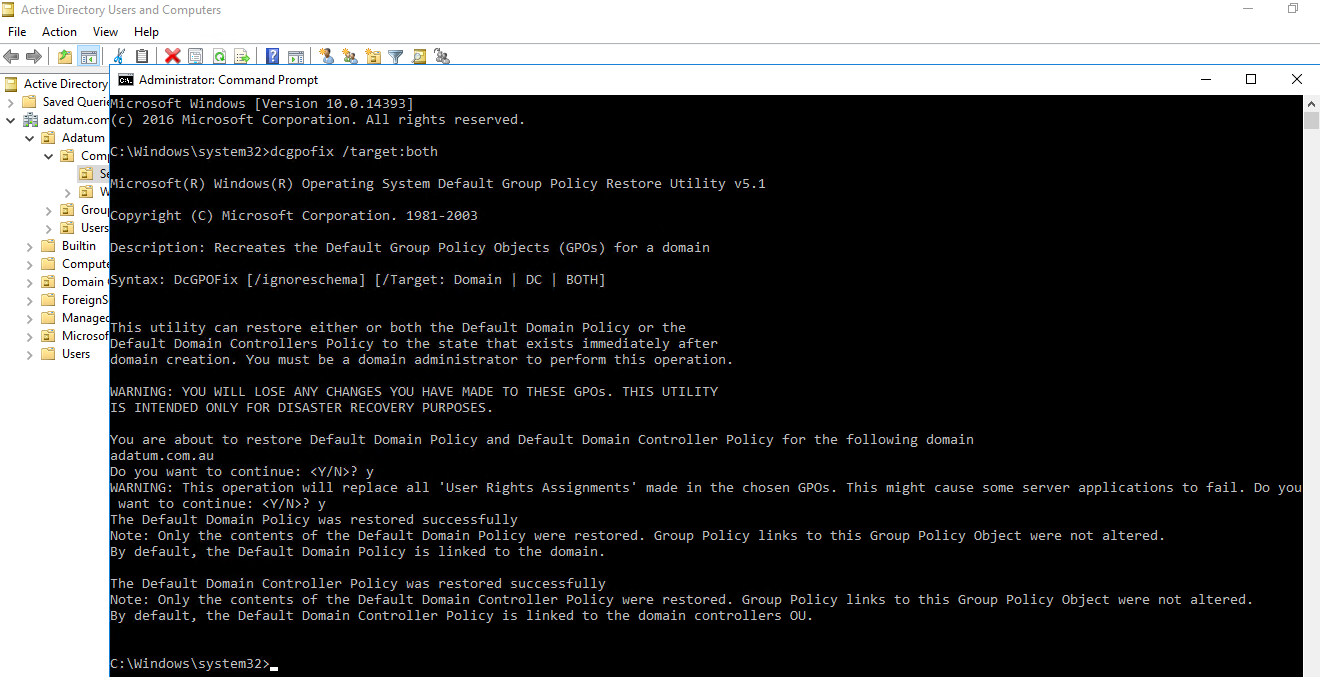
So I first needed to create separate GPOs to store these custom settings and then a way to clear out all of those changes and revert them back to their default state. So how do you go about reversing the damage if you don’t have backups far enough? In comes a small utility called dcgpofix which resets these two Group Policy Objects to their default settings. Launch an admin command prompt window and run the following command;
dcgpofix /target:both
Once executed it will confirm you want to restore them to their out of box defaults, which we can confirm with a couple of Y responses and then bang they should be restored, see the screen shot for an example of it running in my test lab.
Does this overwrite the existing editted Default Domain policy?
Hi Rikesh, yes it should. What ever changes that were made from the default configuration are removed.